MSSP Portal
The MSSP portal in Security Cloud Control is a multitenant, cloud-based management platform for managed security service providers (MSSPs) to efficiently monitor and manage devices across multiple tenants.
The portal consolidates real-time information, such as Configuration Status, Connectivity State, Software Version, and overall network health, into a single interface, providing a seamless overview without the need to access individual tenant environments.
Before you begin
-
Open a support ticket with Cisco TAC to create an MSSP portal to manage your tenants. For more information, see Open a Support Ticket with TAC.
-
We recommend that you clear the cache and cookies from your web browser to avoid browser-related issues.
MSSP Portal Components
The options provided in the left pane of the portal enable you to view the details about security devices and tenants in the portal and configure the portal settings.
-
Dashboard
-
General overview provides an at-a-glance summary of your devices, cloud services, and firewall managers and their connectivity status. This feature helps you quickly identify devices that may have issues.
-
Health overview provides insights into the critical performance data of Secure Firewall ASA devices that are onboarded to your tenants.
For more information, see View Health Overview Dashboard in MSSP Portal.
-
-
Security Devices
Provides information about all the devices, cloud services, templates, and firewall managers that are onboarded to the tenants added to the portal. For more information, see Security Devices Details.
-
Tenants
-
Provides information about all the tenants managed by the portal. You can search by tenant name and export tenant information to a comma-separated value (.csv) file.
-
Note that only users with Super Admin privileges can create new tenants or add existing tenants to the portal.
-
-
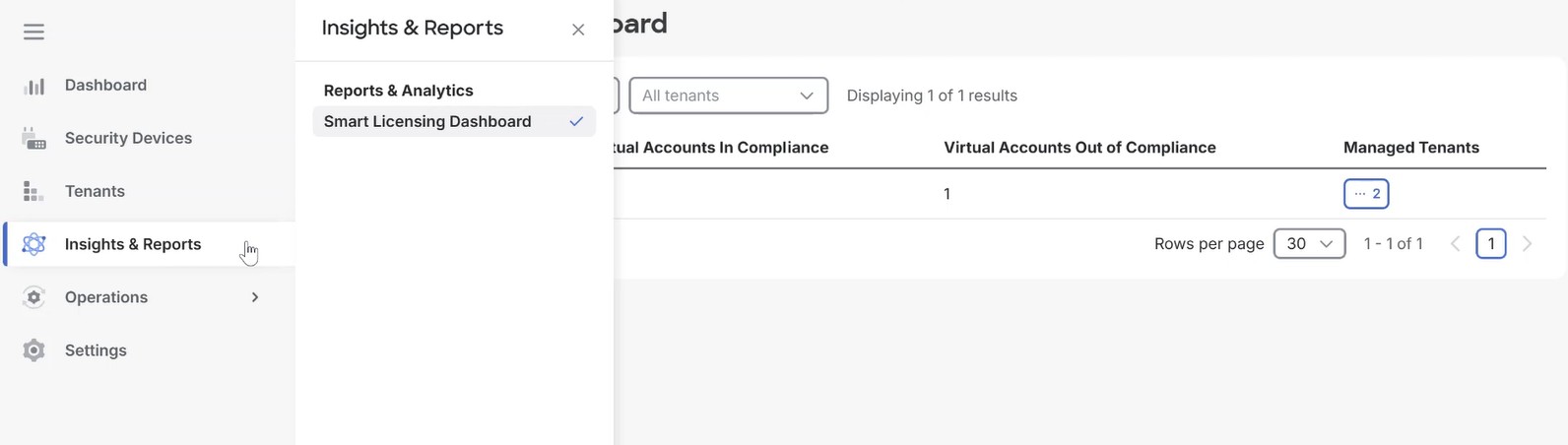
Insights & Reports
The Smart Licensing Dashboard provides visibility into the license usage and compliance status of the Secure Firewall ASAs and Cloud-Delivered Firewall Management Center-managed Secure Firewall Threat Defense devices.
-
Operations
The Upgrades feature can be used to upgrade multiple ASAs and Secure Firewall Threat Defense devices managed by Cloud-Delivered Firewall Management Center (Cloud-Delivered Firewall Management Center) across one or more of your managed organizations.
-
Settings
-
General Settings provides information about Portal Settings.
-
User Management provides a list of all the Users, Active Directory Groups, and Audit Logs. For more information, see User Management.
-
Note | If you are a user with Super Admin privileges, you can use API endpoints to: |